Skip to content

We Are the First System to Heal

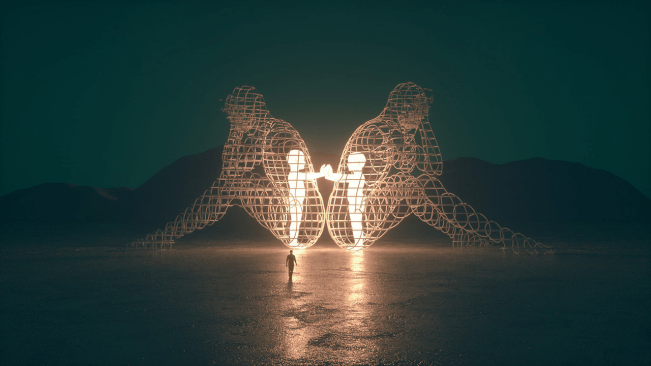
Love, by Ukrainian artist Alexander Milov

To My Fellow Wayfinders,

I’m delighted to share that a new chapter is unfolding in my personal and professional life. This September, I will begin a master’s in Integral Counseling Psychology at the California Institute of Integral Studies. CIIS is unique to the world in the ways it weaves together Western psychological disciplines with intercultural healing and wisdom traditions. Upon completion, I will become a licensed psychotherapist, a role I have in some ways, already been playing. Let me explain…

I’ve worked at the nexus of culture, human imagination, social justice, and systems transformation for 25 years, collaborating with foundations, NGOs, government agencies, and grassroots leaders. I’ve witnessed how artists can sense and illuminate alternative possibilities, offer critical insights into the human condition, and teach us to adapt. I’ve basked in the liberatory power of human imagination and its intrinsic relationship to agency, fueling our capacity to transcend the status quo. I’ve learned that justice is a dynamic reality, not a static goal, requiring diverse collaboration to unleash more expansive ways of engaging with an ever-shifting world. I’ve developed a deep understanding of how culture shapes us and how we shape it back, including our relationships with the world around us and perspectives on how it evolves. I’ve seen how dominant narratives bend our beliefs, worldviews, identities, perceptions, and actions. I’m ceaselessly amazed at how vitality functions in all living systems, including the ecosystems within, and trust that Nature’s lessons can unlock the change we seek.

Most importantly, I’ve come to believe that we are the first system to change and the only one over which we have sovereignty. If we fail to address how dominant culture conditions us, we risk infusing our relationships, practices, policies, and overall ways of being with the very forces we aim to upend. The resulting misalignment hinders our work to repair a broken world, erodes the wellbeing of many working for change, and signals a kind of spiritual dissonance that may be holding our collective transformation hostage. It seems that in all our excitement around belonging, we may have lost sight of becoming.

For us to transform as a society, we have to allow ourselves to be transformed as individuals. And for us to be transformed as individuals, we have to allow for the incompleteness of any of our truths and a real forgiveness for the complexity of human beings.

angel Kyodo williams

As many have said, the issues our species face must move beyond the cultural values and thinking that created them. Dominant culture perpetuates a myth of separation and permanence, manipulating our inner and outer worlds in ways directly contributing to the polycrisis. And while these internal conditions play a key role in enabling harm to persist, they’re often absent from our analyses and remedies. Across disciplines and cultures, there is broad agreement that the most powerful leverage points for lasting change involve exploring the core frameworks of meaning that shape our deepest beliefs. These views are created over time and reinforced by cultural norms and habitual ways of seeing, being, knowing, and acting. Therefore, engaging in inner work, the soil from which external systems grow, is a fundamental aspect of our work to realize a more just and generative world. Severing the two leaves our transformation efforts incomplete and enables the myth of separation to persist. Alternatively, a holistic approach cultivates the conditions necessary to confront uncomfortable truths, (un)learn, and develop new answers to life’s essential questions informed by more expansive and sometimes even paradoxical cultural logics. In doing so, we can discover our unique purpose, realize our potential to flourish, and contribute to genuine repair.

UNESCO defines culture as ‘the set of distinctive spiritual, material, intellectual, and emotional features of society or a social group that encompasses not only art and literature but lifestyles, ways of living together, value systems, traditions, and beliefs.’ I’m excited to research lesser-explored dimensions, particularly how spiritual inquiry can enhance our individual and collective wellbeing and contribute to transformational change. Wisdom traditions have long advocated the personal and societal benefits of cultivating awakened awareness through contemplative practice. Many believe that presence enables us to take accountable action from a place beyond our conditioning, and contemporary research is beginning to catch up.

In a fascinating discovery, clinical psychologist Dr. Lisa Miller of Columbia University, Teachers College, and her partners from Yale have proven that the seat of our spiritual inquiry is innate and inherited. It’s worth noting here that there are critical distinctions between spiritual practices and organized religion. Their work demonstrates that we are physiologically hardwired to engage in and benefit from transcendent awareness but aren’t taking advantage of this ability as well as we could. Their research reveals how contemplative practices activate this capacity, allowing us to transcend the small sense of self, directly correlating to our ability to find purpose, ignite agency, and experience wellbeing.

They assert that the awakened brain is a complementary counterbalance to the hyper-activated achievement-oriented brain regions Western culture disproportionately prioritizes. This research has immense potential implications. Their findings further demonstrate how spiritual inquiry fosters relational emotions of gratitude, humility, awe, curiosity, and empathy—the core capacities needed to engage in the complex work of social change. By learning to balance the awakened brain’s ability to see patterns and emerging relationships with the more achievement-oriented mind, which is outcome-oriented, we are more creative, collaborative, and effective decision-makers. Interestingly, contemplative activities centered on altruism and love of neighbor are most strongly associated with these benefits – a paradoxical insight that calls into question why many people working in the social sector are experiencing burnout. Might the field need a spiritual revolution?

Taking time to slow down and get quiet creates fertile conditions for the new to emerge. Listening deeply allows us to hear what some call our ‘original instructions.’ In this spaciousness, we can explore new possibilities, reshuffle meaning, and remember who we are beyond our conditioning—what Dr. Resmaa Menakem describes as ‘avoiding capture.’ From this place, we can be in dialogue with life. By actively discerning how we can be of service to a changing world, we can reclaim our aliveness and capacity for conscious growth, letting go of what’s no longer needed. This virtuous cycle allows us to re/discover the joy that fuels our vitality and builds the resilience necessary to hold the tension inside the transitions we’re amidst. I’m not the first to arrive at these ideas; many have found the same room from different doors. My hope is that we can find new ways to work in relationship and realize the world our hearts know is possible.

I’ll continue to provide consulting services to a discreet group of values-aligned partners, particularly those for whom these ideas resonate, and to teach in the leadership programs I’m involved in. Please feel free to reach out if you’d like to deepen the conversation.

In the meantime, I am profoundly grateful to all my guides and mentors along the path, including—but by no means limited to—Diane Ragsdale, Ron Ragin, Rupal Sanghvi, Emiko Ono, Akaya Windwood, Deb Nelson, Peter Linett, María Rosario Jackson, Lori Lea Pourier, Mayra Madriz, Philippe Vandenbroeck, Rev. Angel Kyodo Williams, Rika Preiser, Bilel ABOUDI, Jayne Engle, my Green Gulch sangha, and the soil beneath our feet.

Experiment Attractor Fellow and Faculty

“We are heading to what looks like an imminent global social and environmental collapse. We think this is not so much due to lack of money, skills, technologies or even political targets, but lack of imagination.” The Emergence Room

Hosted by the Emergence Room, Demos Helsinki, and Untitled Alliance, the Experiment Attractor Programme aims to significantly alter the course humanity is on by gathering movements around bold ideas.

Kiley Arroyo of the CSC served as one of five inaugural fellows in this program. As a fellow she refined the design of a new adaptive leadership ventured rooted in the practice of soil keeping and intercultural approaches to transformational change.

Afterwards, she was invited to join the Emergence Room faculty and share her transformational change framework with the latest cohort of global fellows.

Additional participants in this groundbreaking program were:

Emergence Room is a collaborative space for emergent initiatives that address deep structural transition, initiated by Dark Matter Labs, MaRS Innovation and the McConnell Foundation.

Demos Helsinki is a globally operating, independent think tank. We conduct research, offer consultancy services, and reimagine and experiment futures with a global alliance, Untitled.  

UNTITLED’s purpose is to collectively re-imagine the society, set the agenda for the most important experiments and execute them together.

Embodied Social Justice Certificate

“Love and justice are not two. without inner change, there can be no outer change; without collective change, no change matters.” Reverend Angel Kyodo Williams

In early 2021, a global group of allied practitioners came together to explore how we embody unjust social conditions, how oppression affects our relationship with our body, and how we can harness the body’s wisdom in making our social justice work more grounded, responsive, and sustainable. It has been humbling to be part of this community. In the coming weeks, I will share a few offerings emerging from this journey, led by the extraordinary Reverend Angel Kyodo Williams.

For those who may be new to the Rev’s work to advance social transformation, I invite you to bask in the beautiful wisdom she shared during a recent conversation with the equally brilliant, Krista Tippet, of On Being:

“There is this place of vulnerability from which truly transformative action must come from is what I have discovered and wrapped my whole language and view around, is that we can take action, and we can take very skillful action. Don’t get me wrong in any way — there’s an enormous amount of advocacy being done, very hard choices that people are making, to put themselves on the front lines. But without this particular place and location of a willingness to be flexible, open, soft-bellied enough to be moved by the truth of the other in whatever given situation, then it is not transformative. It’s change, maybe; it can be moved backwards again, as we can see — the stroke of a pen.

But for us to transform as a society, we have to allow ourselves to be transformed as individuals. And for us to be transformed as individuals, we have to allow for the incompleteness of any of our truths and a real forgiveness for the complexity of human beings and what we’re trapped inside of, so that we’re both able to respond to the oppression, the aggression that we’re confronted with, but we’re able to do that with a deep and abiding sense of “and there are people, human beings, that are at the other end of that baton, that stick, that policy, that are also trapped in something. They’re also trapped in a suffering.” And for sure, we can witness that there are ways in which they’re benefiting from it. But there’s also ways, if one trusts the human heart, that they must be suffering. And holding that at the core of who you are when responding to things, I think, is the way — the only way we really have forward — to not just replicate systems of oppression for the sake of our own cause.”

This image has an empty alt attribute; its file name is screen-shot-2021-06-01-at-11.47.17-am.png

Next Systems Change in Philanthropy

With the intent to contribute to a more equitable, vibrant and sustainable world, the Garfield Foundation supports changemakers to deliver greater impact through systems understanding and networked action. This work is built on a set of core beliefs, including:

  • In the power of collective intelligence
  • Understanding whole systems offers greater insight for leveraged actions
  • Solutions to complex problems accelerate through thoughtful collaboration
  • Systems change is sustained only when it is inclusive
  • Experimenting, reflecting and learning informs effective strategies

The Foundation is collaborating with a team of practitioners from across the United States to develop new strategic learning strategies to deepen the philanthropic sector’s understanding of how to facilitate transformational change.

As a member of the design team, Kiley Arroyo is supporting the creation of this timely work.

NASAA 2020 Creative Placemaking Convocation

In October, the National Assembly of State Arts Agencies (NASAA) and ArtPlace America, convened state arts agency community development coordinators to connect with each other and explore challenges and promising practices in equity-centered cultural development. CSC founder, Kiley Arroyo was honored to moderate the plenary session The Color of Equity: Do We Know It When We See It?

In partnership with an extraordinary panel, this discussion examined ways inequities are nested across visible and invisible systems and structures, from our beliefs to organizational practices, public policies, and physical places. Hannah Drake, an extraordinary artist and activist from Louisville, Kentucky opened this conversation with her earthshaking piece Spaces.

Panelists shared their experiences leveraging the arts, culture, and community-led design to disrupt patterns of harm and center the voices of those impacted by injustice. A full recording of this timely conversation and be found here, along with recording of all conference sessions.

Culture 2030 Goal & Covid-19

On April 20, 2020, the Culture 2030 Goal campaign has released A Statement on Culture and the COVID-19 pandemic. Signed by eight international networks, the statement is framed within their ongoing commitment to the 2030 Agenda and the need to ensure that culture contributes to a just recovery and the UN Decade of Action for the SDGs.

Entitled ‘Ensuring culture fulfills its potential in responding to the COVID-19 pandemic’, the statement’s preamble emphasizes:

With the world faced with the COVID-19 pandemic today and the need to rebuild our societies tomorrow, culture should be at the heart of the response. Culture brings inspiration, comfort, and hope into people’s lives. To harness this potential, the Culture 2030 Goal movement, in the context of its engagement in the United Nations 2030 Agenda, calls on UN agencies, governments, and all other stakeholders to act.

Global actors from government, civil society, the private sector, and academia are encouraged to endorse this statement and work together more strategically as this critical decade unfolds.

Additional background, including the recent evaluation of the progress being made towards the SDGs can be found on the United Cities Local Governments, Culture Committee site.

Click to access EN_culture2030goal_declaration_Culture_and_covid19.pdf

The Age of Cultural Participation: Democratic Roles and Consequences

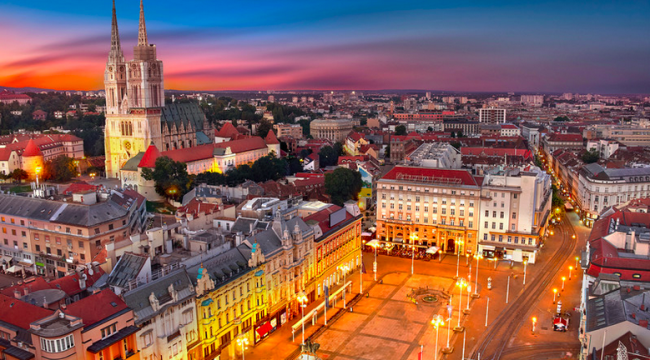
In November of 2019, a group of scholars, artists, activists, and policymakers convened in Zagreb, Croatia, to explore critical issues surrounding the role of cultural participation and inclusive governance in contemporary democracies.

The Kultura Nova Foundation organized the event in collaboration with the Cultural participation network and the Centre for Cultural Policy at the University of Leeds and the Danish research network Take Part from Aarhus University.

Kiley Arroyo participated in the panel entitled “Global Perspectives on Democratic Innovation in Cultural Governance” alongside fellow panelists Arundhati Ghosh (India), Mauricio Delfín (Peru / USA) and moderator Ana Zuvela (Croatia). Ms. Arroyo took this opportunity to present emerging insights from her research on the ways that a living systems framework can help to realize the promise of cultural democracy. This presentation is available by request.

Additional information about the seminar can be found here, along with the complete program.

International Seminar: Cultural Rights and Peace in the City

United Cities Local Governments (UCLG) is the leading global platform on culture and sustainable development. In addition to it’s global forum, held every two years, UCLG’s Culture Committee hosts a unique database of good practices on Culture in Sustainable Cities, and provides municipalities with learning, capacity building, advocacy, and networking programs to support the development and implementation of cultural policies and advancement of the UN Agenda 2030 and Sustainable Development Goals.

In October 2018, UCLG convened a diverse cross-section of government officials, international civil society groups, cultural leaders, activists, and academics who work at the intersection of cultural rights and sustainable local development for the seminar, “Cultural Rights and Peace in the City.” The seminar’s objectives were to:

  • Discuss the specific implications of cultural rights at the local level, and their relation with the generation of conditions for peace in communities.
  • Disseminate the examples of local policies, from cities all around the world, that are already contributing to the exercise of cultural rights in the city.
  • Explore the connection between cultural rights, equitable access to the city, and sustainable development in cities.
  • Highlight the importance to advocate for the cultural component in the international agendas (Agenda 2030 – Sustainable Development Goals and New Urban Agenda.


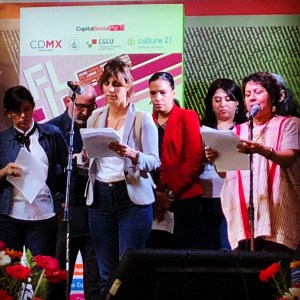
Against the dynamic backdrop of Mexico City, the seminar combined high-level debates, case studies, storytelling, and intimate discussions about issues related to culture and peacebuilding. The conclusions of the events, as well as the CDMX Statement on Culture and Peace, will be presented during the closing session, in the public context of the Zócalo Book Fair.

Kiley Arroyo was invited to present on behalf of IFACCA, drawing on her experience working at the nexus of culture, equitable development, and social justice. This presentation examined whether enduring peace can exist without justice and ways culture can contribute to positive social transformations.

Finca Tierra: Permaculture Design Certificate

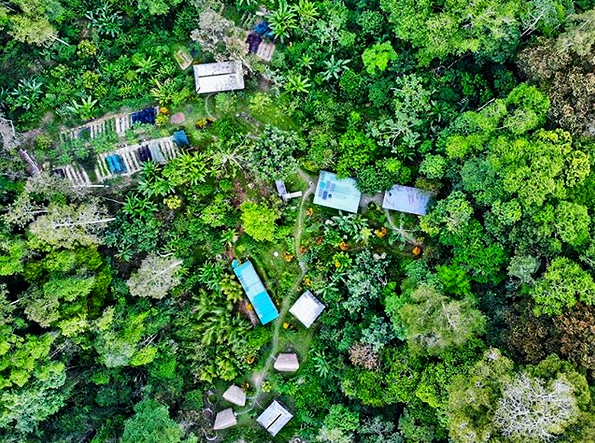
In 2019, Kiley Arroyo completed a permaculture design certificate with Finca Tierra, a ‘school for revolutionaries’ located in the southeastern state of Talamanca, Costa Rica.

Design principles from permaculture, argoecology, biomimicry, and living systems theory have influenced Ms. Arroyo’s work for several years. She was drawn to Finca Tierra’s program in light of the ways their unique curriculum acknowledges the deep indigenous roots of permaculture and many regenerative farming practices.

In the days ahead, she will continue to integrate these principles and practices into initiatives and enterprises that aim to realize a more regenerative future.

IFACCA: Head of Strategic Data & Knowledge

The International Federation of Arts Councils and Culture Agencies (IFACCA) is the global network of arts councils and ministries of culture, with member institutions in over 70 countries. IFACCA envisions a world in which arts and culture thrive and are recognized by governments and peoples for their contribution to society. The IFACCA Secretariat provides services, information and resources to member institutions and their staff – from senior executives and policy makers, to researchers, grant makers and administrators – as well as the wider cultural community.

In this newly created role, I oversaw the development of IFACCA’s new knowledge and data strategy designed to facilitate collaborative learning and adaptive capacity building across this global network. In parallel, I prepared original research on the impact of global migration and forced displacement on artists as well as the discussion paper and companion report for the 8th World Summit on Arts and Culture.

Salzburg Global Seminar, Shock of the New: Arts, Technology, & Making Sense of the Future

 Kiley Arroyo of the CSC is honored to have been invited to participate in the upcoming Salzburg Global Seminar as a fellow and program facilitator, which will explore critical questions about the future of society.

Overview

In times characterized by complexity, disruption and unprecedented speed of change, uncertainty about the future is staring us in the face. Some people relish the unknown: the “art of the possible” gives meaning and excitement to their lives. For many, however, insecurity and divisions in society today make it much harder to embrace the future with confidence. The shock of the new can paralyze rather than energize. Making sense of what lies ahead will become ever more important as science reaches further and deeper into space and nanotechnology, and as artificial intelligence and big data transform daily life. 

Artists and cultural practitioners – like inventors and scientists – push the boundaries of the human imagination. They help us move beyond the familiar, transcend borders between the present and the future, and become more curious about the new and emergent. This landmark session aims to launch an unusual voyage into the future, calling on artists to share their “guides to the galaxy.” Outstanding creative talents will forge an unconventional dialogue with technologists, scientists, futurists, policymakers, educators and others deeply invested in breakthrough discoveries and the fate of our planet. They will come together across divides to envision and anticipate what may lie ahead. 

Building on Salzburg Global’s mission to challenge current and future leaders to shape a better world, this session will provide a generous space for border-busting enquiry to chart collaborative pathways to more livable futures. Participants with radically different perspectives will explore how closer collaboration could inspire and inform public debate and enrich educational processes. How can we better connect parallel conversations and initiatives across the globe? Looking forward, how might artists’ visions play a more central role in the way decision-makers and innovators plan and implement for our shared future? 

Overarching questions to kick-start discussions will include:

  • Can we learn from history? With George Orwell’s 1984 a bestseller in 2017, how accurately have artists in the past “predicted” the future? How have societies reacted to such predictions?
  • What utopian and dystopian views of the future are currently emerging in different art forms? What excitement and fears surround scientific and technological breakthroughs? Where could these interventions take our societies? Who makes the decisions and who owns the knowhow?
  • Do artists, scientists, and decision-makers know how to talk to each other? Could new collaborations across disciplines reshape the face of the world in coming decades?
  • How can we preserve the human element in the face of technologized processes and pressures? Could art, as the ultimate expression of humanity, help to restore a sense of agency and identity? 
  • What futures do we really want and how can we make these futures come to life?

Through this five-day session at Schloss Leopoldskron, Salzburg Global Seminar aims to:

  • Facilitate dialogue, exchange and new forms of global networking and collaboration between cultural activators and representatives of scientific and technological sectors working at the intersection of the arts, innovation, and future thinking;
  • Develop strategies and arts-based approached for cross-sectoral collaboration by connecting arts practice to research and policy agendas, framing a call to action around desirable futures, inspiring public debate and educational curricula, and influencing decision-making processes;
  • Raise greater awareness of the unique and often-underestimated role of the arts in intuiting trends, asking hard questions, and ultimately accelerating transformative change;
  • Share learning through reporting from the session (blogs, newsletters, substantive report) with a broad, international group of stakeholders; and
  • Lay the foundations of a global lab for creative future thinking across generations, disciplines, and sectors to forge a more just and sustainable world.


Image courtesy of Archigram

Stanford University, Creative Cities Initiative

For the 2017-2018 academic year, the Stanford Arts Institute will continue work to advance Stanford Arts Institute globally. The initiative seeks to deepen our collective understanding of the historical and future role of the arts and culture in cities through interdisciplinary research, dialogue, and creative interventions in urban contexts. Using the city as the stage for inquiry, Creative Cities poses questions about the role of art in reimagining the urban sphere, creative economies, the built environment, and more cohesive relationships between and across diverse groups.

There are two main programmatic elements to this project: our year-long fellowship, and the Creative Cities Working Group. The year-long fellowship invites two scholars to Stanford to conduct research in this area, teach one class each, and further the campus conversation about creative cities. This year’s fellows are Samuel Franklin and Gülgün Kayim.

The Creative Cities Working Group engages a broad array of Bay Area writers, thinkers, artists and curators who are engaging critical thought at the nexus of art and urban life. I am humbled to be part of this esteemed group for the 2017-2018 academic year, which includes a variety of contributions, including public speaking and guest lecturing.

1st International Creative Mobilities Forum: Grenoble, France

From September 28th to 30th, Kiley Arroyo, Executive Director of the Cultural Strategies Council participated in the 1st International Creative Mobilities Forum was held in Grenoble, France.

The Forum examined over 60 international examples of ways cultural development strategies can enhance large-scale, urban mobility projects. Designed around a human rights agenda, participants in the 1st International Creative Mobilities Forum explored how investments in public transportation infrastructure can increase citizen access to and participation in the cultural life of communities. Diverse notions of spatial justice, cultural migration, and sustainable development were debated, as a means to draw out common principles and context-specific considerations for policymakers, practitioners, and scholars.

Case studies from Europe, South America, and Asia demonstrated how creative tactics can increase citizen participation in shaping these efforts and subsequent use of public infrastructure investments. In some instances, transportation infrastructure has been completely re-imagined as cultural infrastructure, as in evident in the groundbreaking work underway across Medellín, Colombia – where transport terminals double as libraries, playgrounds, artistic and sports facilities. In France, the Paris Grand Express, a $25 billion expansion of the century-old Métro is underway. When completed in 2030, the system will connect marginalized neighborhoods to the greater metropolitan area, and more 68 stations, which have been designed to double as public art works.

Additional information and a suite of resources can be found at: http://creative-mobilities.org/en/home/


Building a Shared Urban Future Convening, Stanford University

With rapid changes in cities across the world, citizens are demanding and expecting new ways of participation in their urban environments. This evening panel will bring together interdisciplinary perspectives from design, public policy, and the arts to explore theories and framing of citizen participation and new possibilities for engaging the urban populace. From topics of creative democracy to participatory planning in public housing and maker activities in public spaces, how might we build a stronger shared urban future in the Bay Area and one that is inclusive and just?

Speakers
Kiley Arroyo, Cultural Strategies Council and Creative Democracy Lab
Andrea Jany, International Visiting Fellow, Stanford Humanities Center
Corinne Okada Takara, Independent Artist & Art Education Specialist, Okada Design

This event is sponsored by the Stanford Human Cities Initiative, Program on Urban Studies, Stanford Arts Institute, and Haas Center for Public Service with support from the Stanford Humanities Center.

November 13, 2017
Reception at 5pm – Panel starts at 5:30pm

Stanford Humanities Center Levinthal Hall
424 Santa Teresa Street
Stanford, CA 94305

RSVP at bit.ly/sharedurban2017

Save

Gehl Institute, Healthy & Inclusive Placemaking Study Tour: Copenhagen & Malmö

In June of 2017, Kiley Arroyo of participated in a study tour organized by Gehl Institute. Founded in 2015 by Gehl Architects, the Institute builds on the research methods  and experiences pioneered by Jan Gehl and the firm’s Copenhagen, New York, and San Francisco based teams. The purpose of the summer study tour was to test the Institute’s emerging definition of Health and Inclusive Placemaking, identify key components and measures to assess it in practice, and to learn how the global cities of Copenhagen, Denmark and  Malmö, Sweden are working to advance greater equity and public health outcomes through interventions in public space. Findings from this work will be released by Gehl Institute in 2018.


Image courtesyof Gehl Architects