Adjunct Professor, Leading Transformational Change
In a time of ecological instability and social fragmentation, leaders are being called to operate differently. Transformational change demands more than technical expertise — it requires the capacity to collaborate across difference, hold complexity, and question the cultural logics shaping our systems.
At the Minneapolis College of Art and Design (MCAD), CSC designed and led a course focused on cultivating these capacities in emerging and mid-career leaders working across arts, culture, and social impact.
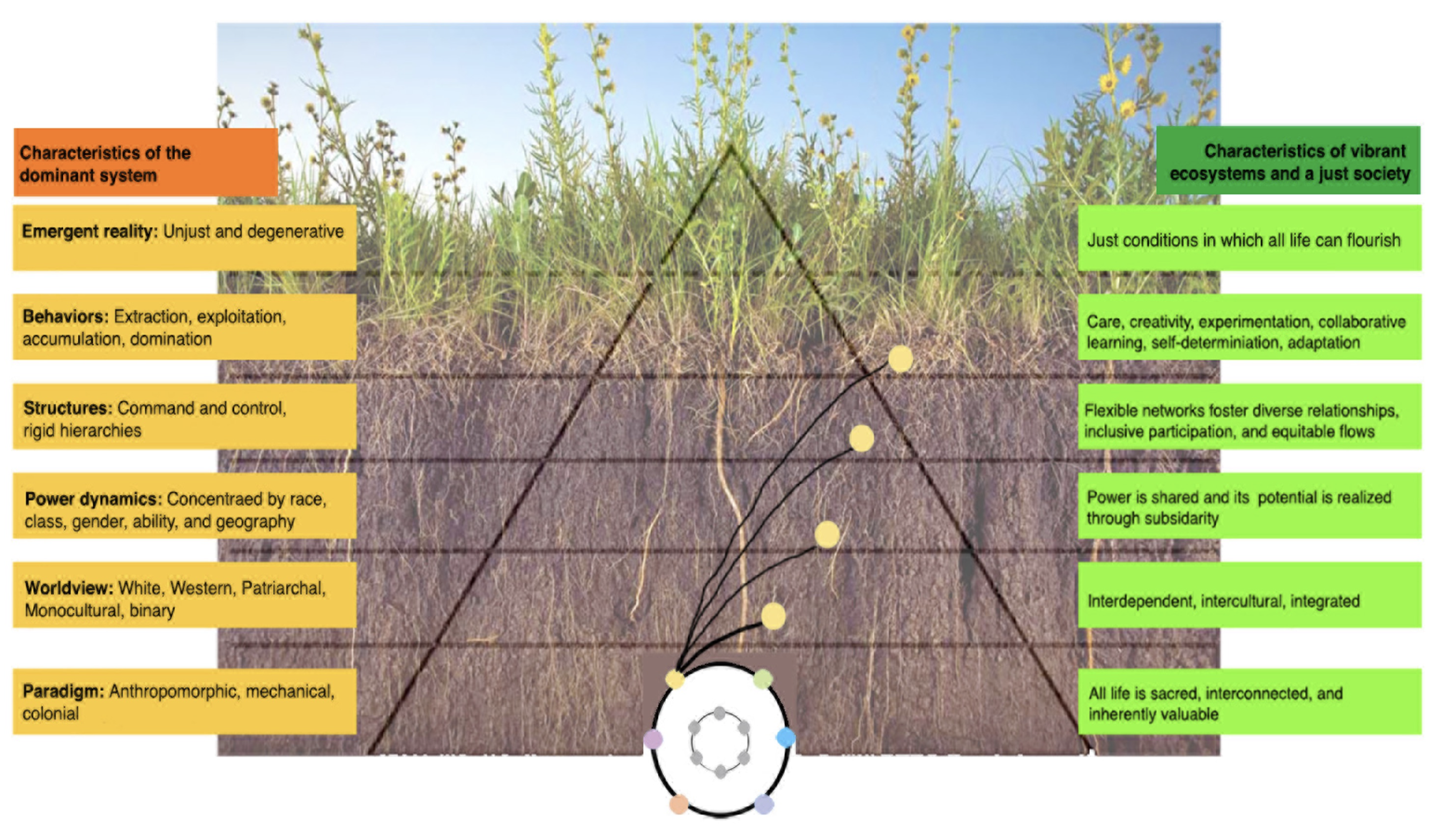
The course was grounded in a core premise: systems are shaped by the worldviews, identities, and assumptions we carry. Without attending to these invisible dimensions, efforts at “systems change” risk reproducing the very paradigms they seek to shift.
Drawing from living systems principles and diverse cultural and decolonial perspectives, the course invited students to:
- Examine the dominant paradigms shaping social and institutional life
- Explore the relationship between inner development and structural transformation
- Cultivate emotional maturity, accountability, and the capacity to work across difference
- Engage epistemic decolonization — making visible and questioning the underlying logics from which systems grow
- Apply regenerative design principles to personal and community-based change projects
Through facilitated dialogue, reflective practice, and collaborative experimentation, participants learned to distinguish between personal and socially constructed identities, understand the worldviews they operate from, and develop the capacity to lead with cultural humility and complexity awareness.
Rather than treating leadership as positional authority, the course emphasized relational stewardship — building the inner and relational conditions necessary for collaborative, life-affirming transformation.
This engagement reflects CSC’s broader commitment to integrating inner awareness, relational coherence, and structural redesign — cultivating leaders capable of advancing regenerative systems grounded in diverse cultural wisdom.
 Cultural Strategies Council